
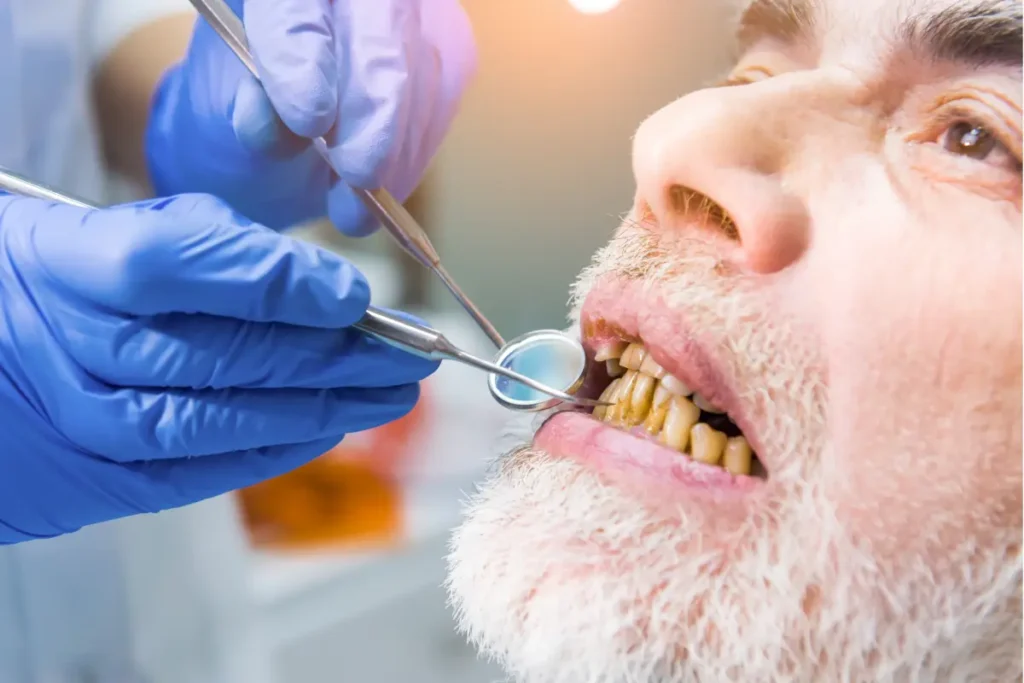
Looking back at old photos and noticing your smile looks different can be a strange thing to catch. If your teeth seem longer than they used to, it’s not your imagination, and it’s usually not about the teeth themselves growing at all. In most cases, gums receding is the real explanation, gradually exposing more of the tooth than used to be visible.
At Vanguard Dental Group, this is a change patients often notice slowly over time, sometimes only realizing it after comparing photos from a few years apart. Understanding why it happens can help you figure out whether it’s something to keep an eye on or address sooner.
In many cases, gum recession is linked to underlying periodontal problems that continue to worsen without treatment. Addressing the cause early with professional gum disease treatment can help protect your gums, reduce further recession, and support your long-term oral health.
What’s Actually Happening With Your Gums
Gum tissue is meant to sit snugly around each tooth, covering the root and protecting the more sensitive structures underneath. When gum recession occurs, that tissue gradually pulls back, exposing more of the tooth’s surface and root. Since this typically happens slowly, it’s easy to miss until the change becomes noticeable, whether in the mirror or in a photo.
Common Reasons Gums Recede
Gum disease is one of the most frequent causes, where ongoing inflammation from bacteria buildup gradually breaks down the gum tissue and the bone underneath it. Brushing too hard or using a toothbrush with firm bristles can also wear away gum tissue over time, even in people with otherwise healthy gum health. Genetics play a role too, since some people are simply born with thinner gum tissue that’s more prone to recession. Teeth grinding, tobacco use, and even poorly fitted dental work can contribute as well.
Is It Always Gum Disease?
Not necessarily, though it’s one of the more common gum disease symptoms worth ruling out. Recession caused by brushing habits or genetics can happen without any accompanying infection or inflammation. That said, since the causes can overlap, it’s worth having a dentist take a look rather than assuming it’s purely cosmetic.
Why It’s Not Just an Appearance Issue
Exposed roots are more vulnerable to sensitivity, particularly to hot and cold temperatures, since they don’t have the same protective enamel layer that the crown of the tooth does. Root surfaces are also more susceptible to decay, since they’re softer than enamel. In more advanced cases, ongoing recession can affect how stable a tooth feels, since less gum and bone support means less overall stability.
Have you noticed your teeth looking longer or your gums pulling back? Schedule a dental evaluation so we can identify the cause and recommend the right treatment before the gum recession progresses further.
Can Receding Gums Be Reversed?
Once gum tissue has receded, it doesn’t grow back on its own. However, catching it early can stop the progression before more tissue is lost. Treatment for the underlying cause, whether that’s a deep cleaning for gum disease, a change in brushing technique, or a nightguard for grinding, can help protect the gum tissue that remains. In cases with significant recession, a gum graft procedure can help rebuild coverage over exposed roots.
What Happens at a Dental Visit
A dental exam typically involves measuring the depth of the gum pockets around each tooth and checking for signs of inflammation, bone loss, or bite issues that may be contributing. This helps determine whether the recession is tied to active gum disease or another cause entirely, which shapes what treatment, if any, makes the most sense.
Protecting the Gum Health You Have Left
Switching to a soft-bristled toothbrush, using a gentle brushing technique, and staying consistent with professional cleanings all help slow further recession. If grinding is a factor, a nightguard can meaningfully reduce the pressure placed on both teeth and gums over time.
Protect Your Gums Before Recession Gets Worse
Teeth that appear longer than they used to are often a sign that your gums have receded over time. Whether the cause is gum disease, aggressive brushing, teeth grinding, or another factor, identifying it early can help prevent further damage and protect your oral health. At Vanguard Dental Group, we’re proud to help patients throughout Derry, NH diagnose and treat gum recession with personalized care. Visit our Derry dental office if you’ve noticed changes in your gums or smile, and let our team help you keep your teeth and gums healthy for years to come.
FAQs
Why do my teeth suddenly look longer?
Teeth usually appear longer because the gum tissue has receded, exposing more of the tooth and sometimes the root. This can happen gradually over time.
Can receding gums grow back naturally?
No. Once gums have receded, they won’t grow back on their own. However, treatment can stop further recession, and gum grafting may be recommended in more advanced cases.
Does gum disease always cause gum recession?
Not always. While gum disease is a common cause, brushing too aggressively, teeth grinding, genetics, and tobacco use can also contribute to gum recession.
Are receding gums a serious problem?
They can be. Receding gums increase the risk of tooth sensitivity, root decay, and, in severe cases, tooth instability if left untreated.
When should I see a dentist about receding gums?
If you’ve noticed your teeth looking longer, increased sensitivity, or your gums pulling away from your teeth, it’s best to schedule an evaluation as soon as possible.
 Mon-Thr: 8AM - 4PM