
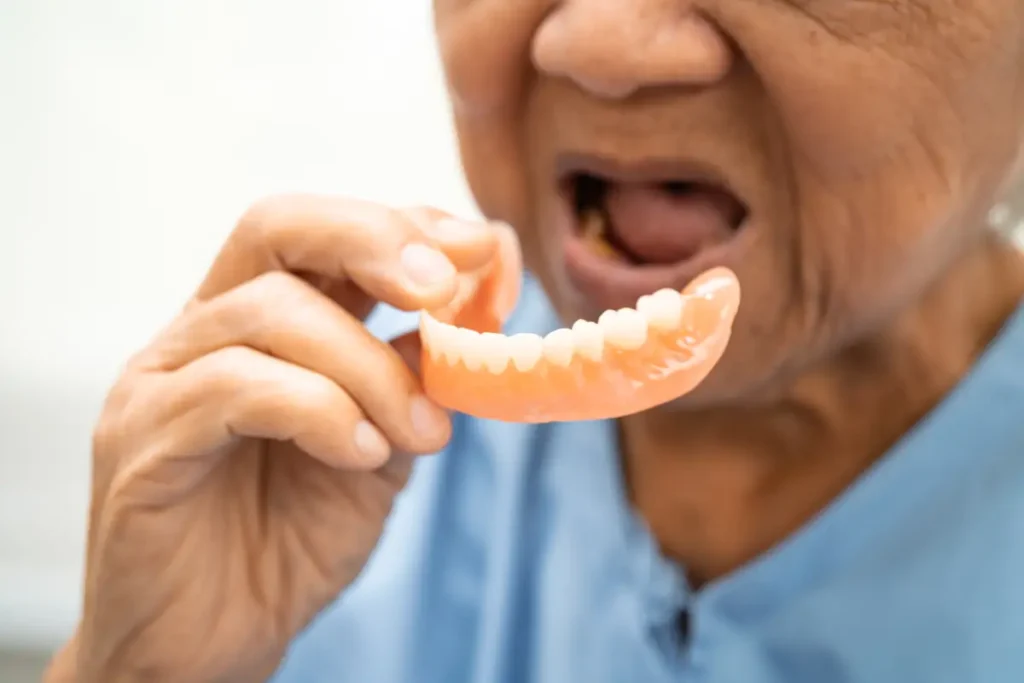
Dentures can make eating, speaking, and everyday activities much easier, but they still need proper care. Some everyday habits may seem harmless while gradually affecting the fit, appearance, or comfort of your dentures.
If you wear dentures, here are six habits worth reconsidering.
1. Sleeping With Your Dentures In
Leaving your dentures in overnight may feel convenient, especially if you are accustomed to wearing them throughout the day. However, your mouth needs time to rest.
Removing removable dentures before bed gives your gums and oral tissues a break from constant pressure. It also gives you time to clean both your mouth and your dentures properly.
Unless your dental professional has recommended otherwise, make removing your dentures before bed part of your nightly routine.
2. Cleaning Them With Hot Water
Hot water might seem like an effective way to clean or disinfect dentures, but excessive heat can damage their shape. Denture materials can warp when exposed to very hot or boiling water, which may affect how comfortably they fit.
Use cool or lukewarm water when rinsing or soaking your dentures. When they are not being worn, keep them moist according to your dental professional’s instructions to help prevent the material from drying out.
3. Scrubbing Too Aggressively
When it comes to cleaning dentures, harder scrubbing does not necessarily mean better results.
Abrasive products or excessive brushing pressure can scratch the surface of your dentures. These scratches may make it easier for stains and buildup to accumulate.
Instead, clean your dentures gently with a soft brush and a nonabrasive denture cleaning product. Avoid bleach, household cleaning powders, and other harsh products unless specifically recommended by an oral health specialist.
4. Using More Adhesive When the Fit Changes
If your dentures begin to feel loose, adding more adhesive may seem like an easy fix. However, adhesive should not be used to compensate for dentures that no longer fit properly.
Changes in your mouth can affect how dentures sit over time. If you suddenly need significantly more adhesive or find yourself reapplying it frequently, have the fit evaluated rather than continuing to add more.
If you are unsure what may be causing the change, a dental professional you trust can help determine whether your dentures need an adjustment or another solution.
5. Regularly Eating Extremely Hard or Sticky Foods
Dentures can handle many everyday foods, but extremely hard or sticky foods can make chewing more difficult and put unnecessary stress on the appliance.
Sticky foods may pull against dentures, while very hard foods can increase the risk of damage. Cutting tougher foods into smaller pieces and chewing evenly on both sides of your mouth can make eating more comfortable.
You do not necessarily have to avoid every food you enjoy. Paying attention to how different foods affect your dentures can help you make smarter choices.
6. Ignoring Changes in Comfort or Fit
A denture that once felt comfortable should not suddenly begin rubbing, slipping, or causing sore areas that you simply learn to tolerate.
Changes in the shape of your mouth can affect denture fit over time. Continuing to wear an uncomfortable appliance without having it checked may allow irritation to continue.
If your dentures no longer feel as stable as they once did, more secure denture options may be worth discussing with your dental professional. The right approach depends on your comfort, fit, oral health, and individual needs.
Give Your Dentures the Care They Deserve
Small changes in your daily routine can make a meaningful difference in how your dentures look, feel, and function. Clean them gently, avoid extreme temperatures, give your mouth a break at night, and pay attention to changes in comfort or fit.
If your dentures are becoming uncomfortable or difficult to manage, Vanguard Dental Group can help you understand what may be causing the problem and discuss appropriate options. Schedule an appointment in Derry, NH, and you can also find the office on the map.
Frequently Asked Questions
1. How often should dentures be cleaned?
Dentures should be cleaned every day to remove food particles, plaque, and other buildup.
2. Can I soak my dentures in hot water?
No. Hot or boiling water can affect denture materials and may change their shape or fit. Cool or lukewarm water is generally a better choice.
3. Should I sleep with my dentures in?
Most people should remove removable dentures at night unless their dental professional has provided different instructions.
4. What should I do if my dentures become loose?
Do not simply keep adding adhesive. A professional evaluation can determine whether your dentures need an adjustment, reline, replacement, or another appropriate solution.
 Mon-Thr: 8AM - 4PM